St Andrew the Apostle
Apostle, the First-Called, brother of St Peter · Feast: 30 November
Word for the day
“He first found his brother Simon and said to him, “We have found the Messiah” (which is translated Anointed).” John 1:41
Life
Andrew was a fisherman from Bethsaida in Galilee who lived at Capernaum with his brother Simon. He was first a disciple of John the Baptist. When John pointed to Jesus and said, Look, here is the Lamb of God, Andrew and another disciple followed Jesus and stayed with him that day (John 1:35–39). For this reason the Eastern Churches call him the Protokletos, the First-Called.
His first act as a disciple was to bring his brother to Jesus. In the Gospels Andrew keeps bringing people to the Lord: Simon Peter (John 1:41–42), the boy with five barley loaves and two fish (John 6:8–9), and the Greeks who wished to see Jesus (John 12:20–22). With Peter, James and John he heard Jesus speak about the end of the age on the Mount of Olives (Mark 13:3).
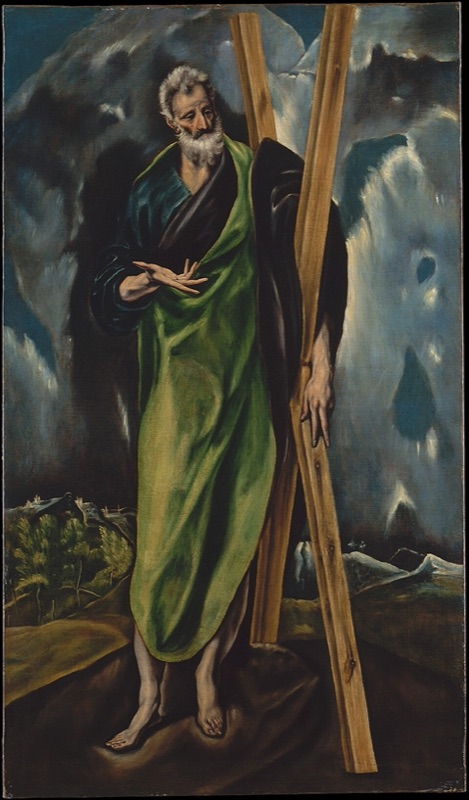
Ancient tradition says that after Pentecost Andrew preached in the lands around the Black Sea and in Greece, and that he was crucified at Patras in Achaia. A later tradition says that his cross was X-shaped. His relics are venerated at Amalfi in Italy; in 1964 Pope St Paul VI returned the relic of his head to Patras. He is patron of the Ecumenical Patriarchate of Constantinople, and also of Scotland, Russia and Greece.
Lessons
Bring someone to Jesus
Andrew's whole life shows that the best thing we can do for others is to introduce them to Christ.
Small gifts in the hands of Jesus
He brought five loaves and two fish, asking what they were among so many; Jesus fed thousands.
Brothers in two Churches
Andrew is patron of Constantinople as Peter is of Rome; his feast is a day of prayer for Christian unity.
Stories
We have found the Messiah (history)
After a single day with Jesus, Andrew ran to tell his brother and brought him to the Lord (John 1:40–42).
Greeting the cross (tradition)
An ancient account of his passion says that Andrew greeted the cross on which he was to die as the cross he had long desired, and preached from it for two days.
Words of the saint
O good cross, long desired and now prepared for my longing soul.
Words given to St Andrew in the ancient Passion of St Andrew, in substance
Homily
1. Come and see
Andrew spent one day with Jesus and was changed (John 1:39). Faith begins with time spent with him.
2. We have found the Messiah
His first act was to bring his brother (John 1:41). Mission begins at home.
3. Small gifts in Jesus' hands
He brought five loaves and two fish; Jesus fed thousands (John 6:8–11).
Dear friends, St Andrew is called in the East the First-Called. He was a disciple of John the Baptist, and when John pointed to Jesus as the Lamb of God, Andrew followed. Jesus asked: what are you looking for? And then: come and see (John 1:38–39). Andrew stayed with him that day, and his life changed.
What did he do next? He ran to his brother Simon and said: we have found the Messiah; and he brought him to Jesus (John 1:41–42). Without Andrew's invitation, would there have been a St Peter? Later Andrew brought the boy with five loaves, and the Greeks who wanted to see Jesus. Andrew is the saint of bringing people.
Each of us was brought to Jesus by someone: a parent, a catechist, a friend. Today let us thank God for that person, and let us become an Andrew for someone else. Invite one person this Advent: come and see. Amen.
Prayer
Lord, we humbly ask that St Andrew the Apostle, who was a preacher and pastor of your Church, may always be our advocate before you. Amen.