St Antony of Padua
Franciscan priest, Doctor of the Church · Feast: 13 June
Word for the day
“proclaim the message; be persistent whether the time is favorable or unfavorable; convince, rebuke, and encourage, with the utmost patience in teaching.” 2 Timothy 4:2
Life
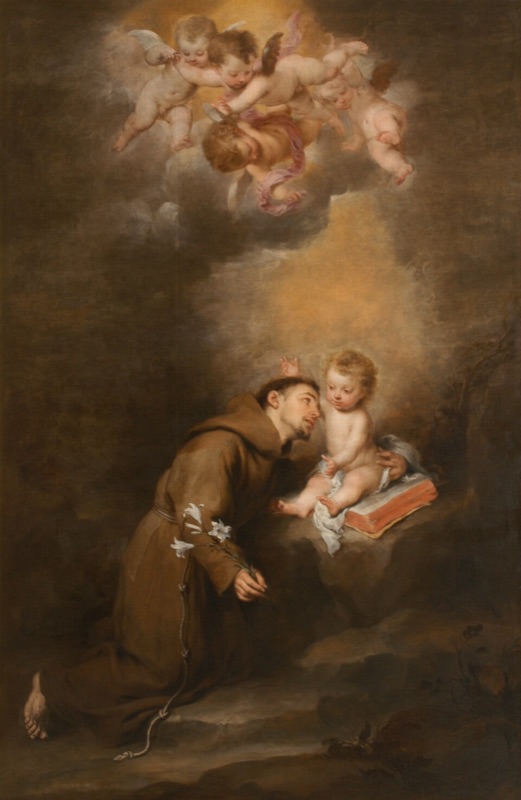
Fernando Martins was born in Lisbon, Portugal, around 1195. He became an Augustinian canon and studied the Scriptures deeply. When the bodies of five Franciscan friars martyred in Morocco were brought to Coimbra in 1220, he was so moved that he joined the Franciscans, taking the name Antony, and set out for Africa to preach.
Illness forced him to return, and a storm drove his ship to Sicily. He lived hidden in a small hermitage in Italy until, at an ordination at Forlì, he was asked to preach without preparation; his learning and fire astonished everyone. St Francis himself entrusted him with teaching theology to the friars. He preached in Italy and France to great crowds, calling sinners to conversion and defending the poor against usurers.
He died near Padua on 13 June 1231, about 36 years old. He was canonised in 1232, less than a year after his death, and Pope Pius XII declared him a Doctor of the Church in 1946. Throughout the world, and in countless Kerala homes and churches, people pray to him on Tuesdays and ask his help.
Lessons
Preach with your life
Antony taught that actions speak louder than words.
Love the Word of God
His preaching was full of Scripture, which he knew almost by heart.
Hidden years prepare great work
Before his preaching became famous he served quietly and humbly.
Charity to the poor
The custom of “St Antony's bread”, alms for the hungry in his honour, keeps his love for the poor alive.
Stories
Sermon to the fishes (legend)
When the people of Rimini refused to listen, Antony went to the shore and began to preach to the fish, and they gathered to listen; the townspeople were moved to repentance. The story comes from the Little Flowers of St Francis.
The lost book (tradition)
A novice ran away with Antony's psalter, which contained his notes. Antony prayed, and the novice returned the book and came back to the community. This is the origin of the custom of asking St Antony to help find lost things.
Words of the saint
“Actions speak louder than words; let your words teach and your actions speak.”
St Antony of Padua, Sermons, Office of Readings, 13 June
Homily · The saint's life and message
1. From Lisbon to the Franciscans
Moved by the martyrs of Morocco, he became a friar (1220).
2. Hidden years
Unknown in a small hermitage until called to preach.
3. A preacher of the Word
Learned and fiery, calling sinners to conversion.
4. Friend of the poor
Charity to the poor; St Antony's bread.
Dear brothers and sisters, St Antony is loved all over the world, and many pray to him to find lost things. But he was first of all a great preacher of the Word of God and a friend of the poor.
Fernando Martins was born in Lisbon around 1195 and became an Augustinian canon, studying the Scriptures deeply. When the bodies of five Franciscans martyred in Morocco were brought to Coimbra, he was so moved that he joined the Franciscans, taking the name Antony, and set out for Africa. Illness forced him back, and a storm took his ship to Italy.
For a while he lived unknown in a small hermitage. Then, at an ordination, he was asked to preach without preparation, and everyone was astonished at his learning and fire. St Francis entrusted him with teaching theology to the friars. He preached to great crowds, calling sinners to repentance and defending the poor. He died in 1231, aged about thirty-six, and is a Doctor of the Church.
Antony said: let your words teach and your actions speak. Let us honour him by loving the Word of God, by our charity to the poor, and by asking his help to find not only lost things, but lost faith and lost people.
Homily option 2 · In the light of the Word: preach the word in season and out
1. Proclaim the message
Be persistent whether the time is favourable or unfavourable (2 Timothy 4:2).
2. The Word is living
Sharper than a two-edged sword (Hebrews 4:12).
3. Rebuke and encourage
Antony challenged injustice and comforted sinners.
4. With patience
Teaching with utmost patience.
Dear friends, St Paul told Timothy: proclaim the message; be persistent whether the time is favourable or unfavourable; convince, rebuke and encourage, with the utmost patience in teaching (2 Timothy 4:2). St Antony lived this charge.
Antony knew the Scriptures so well that Pope Gregory IX called him the ark of the testament. The Word of God is living and active, sharper than any two-edged sword (Hebrews 4:12). When Antony preached, hearts were cut to the core and people went to confession in great numbers.
He did not only comfort; he also rebuked. He preached against greed and usury that crushed the poor. He was courageous before the powerful. Yet he always encouraged sinners to hope in God's mercy.
Not all of us are preachers, but all of us are called to share the Word. Read the Bible daily. Let it convince, rebuke and encourage you first. Then share it with patience, in your family and among friends.
Homily option 3 · For young people and families: finding what is lost
1. What have we lost?
Faith, prayer, peace, friendships.
2. Lost things and the lost son
The Father seeks the lost (Luke 15).
3. Bread for the poor
Thanksgiving through charity.
4. Learn and teach
Antony loved study.
Dear young people and families, many of us pray to St Antony when we lose keys, phones or documents. That is a sign of trust, and it is good. But let us ask: what more important things have we lost?
Some have lost the habit of prayer, or Sunday Holy Mass / Holy Qurbana. Some have lost peace in the family, or a friendship through a quarrel. Some have lost hope. Jesus told of a shepherd looking for a lost sheep, a woman searching for a lost coin and a father waiting for a lost son (Luke 15). God searches for what is lost. Ask St Antony to help you find what matters most.
In many places, when people receive a favour through St Antony, they give bread or money for the poor. This custom is beautiful: our thanksgiving becomes charity. When God helps you, help someone else.
Young people, Antony loved study, especially the Scriptures. Study well, and learn your faith deeply. A faith that is understood is stronger in times of temptation and doubt.
Prayer
Almighty God, you gave St Antony to your people as an outstanding preacher and a helper in their needs. Through his intercession help us to follow the Gospel, to love the poor, and to find again whatever we have lost, above all your grace. Amen.