St Charles Borromeo
Cardinal Archbishop of Milan, reformer after the Council of Trent · Feast: 4 November
Word for the day
“I am the good shepherd. The good shepherd lays down his life for the sheep.” John 10:11
Life
Charles Borromeo was born in 1538 in the castle of Arona on Lake Maggiore, into a noble family. When his uncle became Pope Pius IV in 1559, Charles, only twenty-one, was called to Rome and made a cardinal and the Pope's secretary of state. He used his position to help bring the Council of Trent to its conclusion in 1563 and worked on the Roman Catechism that followed it.
After the sudden death of his elder brother he chose to be ordained a priest and bishop, and he went to live in his diocese of Milan, which had not had a resident archbishop for decades. He visited every parish, held synods, founded seminaries for the training of priests, set up schools of Christian doctrine for children, and reformed the life of clergy and religious. He gave much of his wealth to the poor.
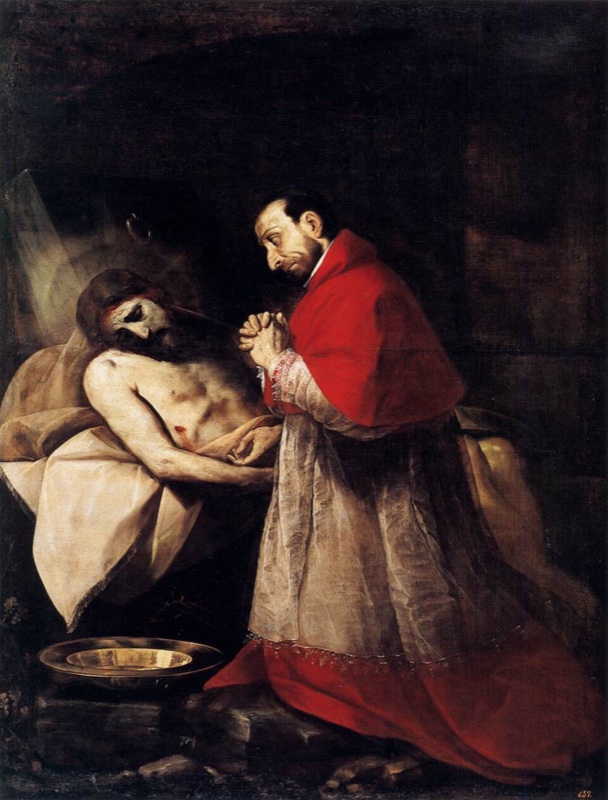
During the plague of 1576 he stayed in the city when many officials fled, organised care for the sick, sold his own possessions to feed the people and walked in penitential processions. He died on 3 November 1584, aged forty-six, worn out by work. He was canonised in 1610.
Lessons
Reform begins with oneself
Charles first changed his own life of privilege into one of prayer and simplicity, and only then reformed others.
A shepherd stays with the flock
In the plague he did not flee; he stayed to serve the sick and the dying.
Teaching the faith matters
His schools of Christian doctrine and seminaries show that the Church is renewed when the faith is taught well.
Stories
The shot in the chapel (history)
In 1569 some members of a religious order he was reforming hired a man who fired at Charles while he knelt at evening prayer. The bullet struck him but did not wound him, and he continued his prayer. He asked for leniency for his attackers.
Words of the saint
Be sure that you first preach by the way you live; otherwise people will notice that you say one thing and live another.
St Charles Borromeo, sermon at his last synod (Office of Readings, 4 November), in substance
Homily
1. Reform starts at home
Charles first changed his own life of privilege before he reformed his diocese.
2. The good shepherd stays
The good shepherd lays down his life for the sheep (John 10:11). In the plague Charles stayed when others fled.
3. Teach the faith well
Seminaries and catechism classes were his answer to a confused Church. Our answer too is formation.
Dear friends, Charles Borromeo had everything the world admires: noble birth, wealth, power, a cardinal's hat at twenty-one. He could have lived a comfortable life in Rome. Instead he chose to become what Jesus calls a good shepherd, one who lays down his life for the sheep (John 10:11).
He began with himself: prayer, fasting, simplicity. Then he went to live among his people in Milan, visited every parish, founded seminaries and catechism schools, and reformed what was corrupt. When the plague came in 1576 and officials fled, he stayed, sold his goods to feed the hungry and walked barefoot in penitential processions.
The Church is always in need of renewal, and renewal always begins with one heart. Let us pray for our bishops and priests, that they may be shepherds like Charles. And let each of us ask: what in my own life needs reform before I ask others to change? Amen.
Prayer
Lord, keep in your people the spirit which filled St Charles Borromeo, so that your Church may be constantly renewed and, conformed to Christ, may show his face to the world. Amen.