St Elizabeth of Hungary
Princess, wife, mother and servant of the poor · Feast: 17 November
Word for the day
“Be merciful, just as your Father is merciful.” Luke 6:36
Life
Elizabeth was born in 1207, a daughter of King Andrew II of Hungary. As a child she was sent to the court of Thuringia in Germany, and in 1221 she married Ludwig IV, Landgrave of Thuringia. Their marriage was a happy one; they had three children, and Ludwig supported her generosity to the poor.
From the Wartburg castle Elizabeth went down to the sick and hungry, fed hundreds of people daily during a famine, and built a hospital at the foot of the castle. In 1227 Ludwig died of illness at Otranto in southern Italy while on his way to the Crusade. Elizabeth, only twenty, was grief-stricken; she said that the world and all its joys were dead to her with him.
Soon afterwards she left the court, became a member of the Franciscan Third Order and used her dowry to found a hospital at Marburg, where she herself nursed the sick, the poor and lepers. Under a strict spiritual director, Konrad of Marburg, she lived in poverty and penance. Worn out, she died on 17 November 1231, aged twenty-four. She was canonised in 1235.
Lessons
Holiness in marriage
Elizabeth loved her husband and children deeply; her sanctity grew within family life.
Riches are for sharing
A princess, she saw her wealth as belonging to the poor.
Faith in sorrow
After the death of her husband she turned grief into deeper service.
Stories
Bread into roses (legend)
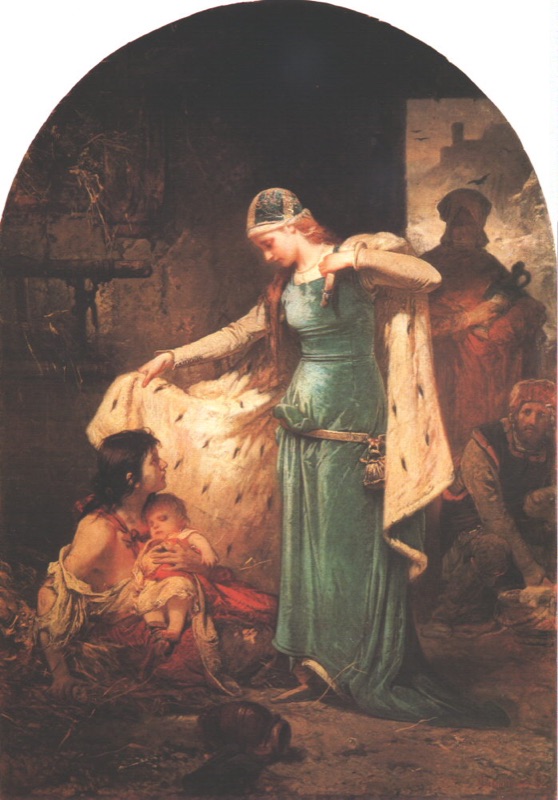
A legend says that once, when Elizabeth was carrying bread in her cloak to the poor, she was stopped and asked what she carried; when she opened her cloak, only roses were seen.
The hospital at Marburg (history)
Elizabeth founded the hospital of St Francis at Marburg in 1229 and personally served the sick there until her death.
Homily
1. Merciful like the Father
Be merciful, just as your Father is merciful (Luke 6:36). Elizabeth fed hundreds daily in famine.
2. Holiness in family life
She loved her husband and children deeply; her sanctity grew inside marriage.
3. Grief turned to service
Widowed at twenty, she founded a hospital and nursed the sick herself.
Dear friends, St Elizabeth of Hungary was a princess who lived only twenty-four years, yet she is one of the best-loved saints of Europe. Why? Because she took seriously the word of Jesus: be merciful, just as your Father is merciful (Luke 6:36).
She was a loving wife and mother. Her husband Ludwig supported her charity, and together they made their castle a place from which bread went down to the hungry. Holiness did not take her away from family life; it grew inside it. When Ludwig died, she was crushed with grief, but she turned her sorrow into service, founding a hospital at Marburg and nursing the sick and lepers with her own hands.
Elizabeth teaches families that holiness is possible at home, and teaches those who grieve that love can still be given. Today let us share bread with someone who is hungry, and pray for families who have lost a husband or wife. Amen.
Prayer
God of mercy, you gave St Elizabeth of Hungary the grace to recognise and honour Christ in the poor. Through her prayers, make us untiring servants of the hungry and the afflicted. Amen.