St George
Martyr · Feast: 23 April
Word for the day
“Put on the whole armor of God, so that you may be able to stand against the wiles of the devil.” Ephesians 6:11
Life
George was a Christian martyr who died at Lydda (today Lod, in Israel), probably in the persecution of Diocletian around the year 303. Veneration of him spread very early throughout East and West; churches were built over his tomb at Lydda, and he is honoured in the Eastern Churches as a “Great Martyr”.
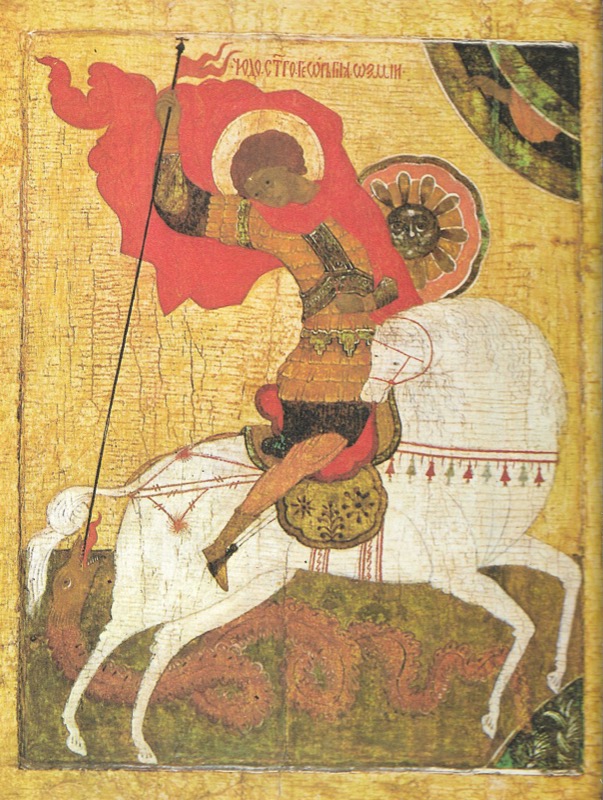
Ancient accounts say that he was a soldier who refused to deny Christ and was tortured and beheaded. Pope Gelasius I (494) already remarked that his deeds were known to God, while many stories about him were uncertain. The famous story of George slaying a dragon to save a princess appears only in the Middle Ages, especially in the Golden Legend (13th century), and is a legend that pictures the victory of faith over evil.
In Kerala George (Geevarghese) is one of the most loved saints. Great pilgrim churches such as Edathua and Aruvithura are dedicated to him, and his feast in April and May draws huge crowds.
Lessons
Faith over fear
George chose Christ over his career and his life.
Fight evil with God's armour
The dragon is a picture of sin and evil; we overcome it with faith, prayer, truth and the Word of God.
A soldier who serves
Strength is given to protect the weak, as the legend shows him rescuing the helpless.
A saint for East and West
George is honoured by Christians of every tradition, a sign of the one faith.
Stories
The dragon (legend)
The legend tells of a dragon that terrorised a city and demanded human victims. George, passing by, made the sign of the cross, overcame the dragon, and the people of the city were baptised. It is a medieval legend, a picture of Christ's victory over evil.
Homily · The saint's life and message
1. A martyr of Lydda
Probably under Diocletian, around 303.
2. Honoured East and West
A Great Martyr in the Eastern Churches.
3. The legend of the dragon
A medieval story (Golden Legend) picturing the victory of faith over evil.
4. Faith over fear
He refused to deny Christ.
Dear brothers and sisters, St George is honoured all over the world, in East and West. In Kerala many churches are dedicated to him, and his image with the dragon is very familiar. What do we really know?
George was a Christian martyr who died at Lydda, in the Holy Land, probably in the persecution of Diocletian around the year 303. Veneration of him spread very early; churches were built over his tomb, and the Eastern Churches call him a Great Martyr. Ancient accounts say he was a soldier who refused to deny Christ and was tortured and beheaded. Already in the fifth century Pope Gelasius said that his deeds were known to God, while many stories about him were uncertain.
The famous story of George killing a dragon to rescue a princess appears only in the Middle Ages and is a legend. But legends can teach truth. The dragon is a picture of evil; the knight is a picture of faith that defeats evil with God's help.
Let us honour St George by fighting the real dragons in our lives and society: sin, addiction, injustice, fear. And let us put on the whole armour of God (Ephesians 6:11), trusting that Christ has already won the victory.
Homily option 2 · In the light of the Word: the armour of God
1. Our struggle is spiritual
Not against flesh and blood (Ephesians 6:12).
2. The belt of truth and breastplate of righteousness
Honesty and integrity.
3. The shield of faith
Quenching the flaming arrows of the evil one (Ephesians 6:16).
4. The sword of the Spirit
The Word of God and prayer (Ephesians 6:17–18).
Dear friends, the word chosen for St George is: put on the whole armour of God, so that you may be able to stand against the wiles of the devil (Ephesians 6:11). George was a soldier, and he knew that the real battle is spiritual.
Paul says our struggle is not against enemies of flesh and blood, but against spiritual forces of evil (Ephesians 6:12). Our enemies are not other people, but sin and the evil one who tempts us. That is why Christians do not hate.
The armour is described piece by piece: the belt of truth, the breastplate of righteousness, shoes ready to proclaim the gospel of peace, the shield of faith, the helmet of salvation, and the sword of the Spirit, which is the Word of God (Ephesians 6:14–17). Truth, integrity, faith and the Scriptures are our weapons.
And Paul adds: pray in the Spirit at all times (Ephesians 6:18). George was victorious because he stood firm in faith and prayer. Let us dress each morning in this armour with a short prayer, and face our dragons without fear.
Homily option 3 · For young people and families: fighting today's dragons
1. Name your dragon
Temptation, addiction, anger, laziness.
2. Courage, not violence
Christian courage is not aggression.
3. Protect the weak
The princess in the story: defend those in danger.
4. Telling legend from history
Love saints truthfully.
Dear young people, everyone loves the picture of St George on his horse defeating the dragon. It is a legend from the Middle Ages, not history, but it carries a true message: with God's help, evil can be defeated.
What is your dragon? Maybe pornography, drugs, alcohol, gaming addiction, anger, lying or laziness. Name it honestly. Then fight it with the weapons of God: prayer, confession, the Eucharist, good friends, and if needed, professional help.
Christian courage is not violence. George did not fight people for his faith; he suffered for it. Be brave, but never aggressive. And like the knight in the story, protect the weak: the bullied classmate, the girl who is harassed, the child who is in danger.
Families, teach your children to love the saints truthfully: what is history, what is tradition, what is legend. The truth of the faith does not need exaggeration. St George's real glory is that he chose Christ over his life.
Prayer
Lord God, you gave St George the courage to confess Christ to the end. Through his intercession clothe us with the armour of faith, protect us from every evil, and make us strong defenders of the weak. Amen.