St Sebastian
Martyr of Rome · Feast: 20 January
Word for the day
“Be faithful until death, and I will give you the crown of life.” Revelation 2:10
Life
Sebastian was a Christian martyr in Rome, probably during the persecution of the emperor Diocletian at the end of the 3rd century. St Ambrose of Milan, writing in the 4th century, mentions him as a native of Milan who suffered in Rome. He was buried on the Via Appia, where the Basilica of St Sebastian and its catacomb stand today.
A later account of his martyrdom (5th century) tells that he was an officer in the imperial guard who secretly encouraged Christians in prison. When his faith was discovered he was tied to a post and shot with arrows, left for dead, nursed back to health by a Christian widow named Irene, and then, after boldly confronting the emperor, beaten to death. Historians regard many details of this account as legendary, but his martyrdom and early veneration are certain.
Sebastian became one of the most loved saints of the Church, invoked especially in times of plague and epidemic. In Kerala countless churches are dedicated to him, and his feast in January, with processions of the arrows (ambu perunnal), is among the great festivals of many parishes.
Lessons
Courage in hidden places
According to tradition he used his position to strengthen others in their faith.
Faithful until death
He did not give up Christ even after surviving the first attempt on his life.
Faith in times of epidemic
Christians have turned to his intercession in plagues; we too may ask his help for the sick.
A soldier of Christ
Every Christian is called to the courage of a soldier, without hatred.
Stories
The arrows (tradition)
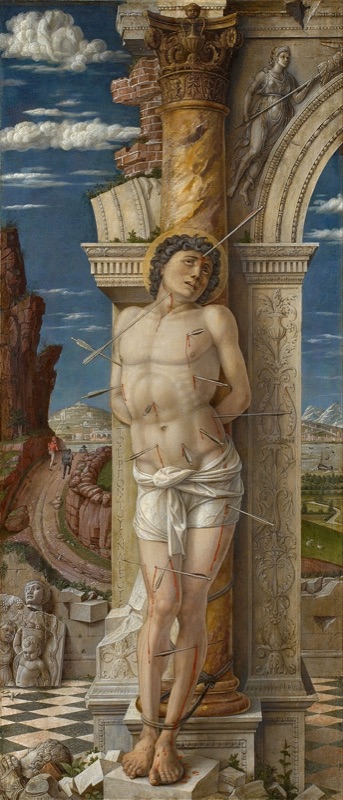
The best-known image of Sebastian shows him tied to a tree, pierced with arrows. It comes from the account of his first martyrdom, which he survived.
Irene's care (legend)
The tradition says that Irene, widow of a martyr, came at night to bury him and found him still alive, and nursed him back to health.
Homily · The saint's life and message
1. A martyr of Rome
Probably under Diocletian, late 3rd century; mentioned by St Ambrose.
2. A secret encourager
According to a later account, an officer who strengthened imprisoned Christians.
3. The arrows
The tradition of his first martyrdom by arrows.
4. Faithful until death
Revelation 2:10.
Dear brothers and sisters, St Sebastian is one of the most popular saints in Kerala; many parishes celebrate his feast with great devotion. What do we know about him?
History tells us that Sebastian was a Christian martyr in Rome, probably during the persecution of Diocletian at the end of the third century. St Ambrose, writing in the fourth century, mentions him. He was buried on the Via Appia, where his basilica stands today.
A later account of his martyrdom, from the fifth century, tells that he was an officer in the imperial guard who secretly encouraged Christians in prison. When his faith was discovered, he was tied to a post and shot with arrows, left for dead, nursed by a Christian widow, and later beaten to death after confronting the emperor. These details belong to tradition, and some are legendary; but the heart of the story is certain: Sebastian gave his life rather than deny Christ.
The risen Lord says: be faithful until death, and I will give you the crown of life (Revelation 2:10). Let us honour St Sebastian not only with processions and fireworks, but with courage and fidelity in our faith.
Homily option 2 · In the light of the Word: the crown of life
1. Do not fear what you are about to suffer
Revelation 2:10.
2. The armour of God
Truth, righteousness, faith (Ephesians 6:13–17).
3. Encourage one another
Strengthen the weak (1 Thessalonians 5:11).
4. The crown
Faithfulness rewarded (2 Timothy 4:7–8).
Dear friends, the risen Christ says to the Church in Smyrna: do not fear what you are about to suffer; be faithful until death, and I will give you the crown of life (Revelation 2:10). These words fit St Sebastian perfectly.
Tradition remembers Sebastian as a soldier. St Paul uses a soldier's image: put on the whole armour of God, the belt of truth, the breastplate of righteousness, the shield of faith, the helmet of salvation and the sword of the Spirit (Ephesians 6:13–17). Sebastian's true armour was not Roman steel, but faith.
The tradition says he used his position to encourage Christians in prison. Paul writes: encourage one another and build up each other (1 Thessalonians 5:11). Whatever our position, we can use it to strengthen those who are weak in faith.
At the end of his life Paul said: I have fought the good fight, I have finished the race, I have kept the faith; there is reserved for me the crown of righteousness (2 Timothy 4:7–8). Let us ask St Sebastian to help us keep the faith until the end.
Homily option 3 · For young people and families: true devotion at the feast
1. Beyond the fireworks
Feasts should lead to Christ.
2. A saint in times of epidemic
Christians invoked him in plagues; we pray and also care.
3. Courage at school and work
Do not hide your faith.
4. Feasts without excess
No alcohol abuse or wasteful show; share with the poor.
Dear young people and families, the feast of St Sebastian is a big celebration in many parishes, with processions, arrows, music and fireworks. Celebrations are good. But let us ask: does our feast lead us closer to Christ, as Sebastian was?
For centuries Christians prayed to St Sebastian in times of plague. Faith and responsibility go together: we pray for protection, and we also care for the sick, follow good health practice and help the poor in times of epidemic.
Sebastian, according to tradition, kept his faith in the emperor's guard, a place where Christians were in danger. Young people, at school, college and work you may be the only person who prays or goes to church. Do not hide it. Be respectful, but be brave.
Let our feasts be holy: no excessive drinking, no wasteful display, no quarrels. Let part of the feast money go to the poor. Then St Sebastian, who gave everything for Christ, will be truly honoured.
Prayer
Lord God, you gave St Sebastian the strength to remain faithful until death. Through his intercession protect us from epidemic and disease, give strength to the sick, and make us courageous witnesses of Christ. Amen.