St Thomas the Apostle
Apostle of India, Father in faith of the St Thomas Christians · Feast: 3 July
Word for the day
“Jesus said to him, “Have you believed because you have seen me? Blessed are those who have not seen and yet have come to believe.”” John 20:29
Life
Thomas, called Didymus (“the Twin”), was one of the Twelve chosen by Jesus. The Gospel of John gives us three short scenes that show his character: his courage when Jesus decides to go back to Judea, where his enemies wanted to kill him; his honest question at the Last Supper about the way; and his doubt and great confession after the Resurrection.
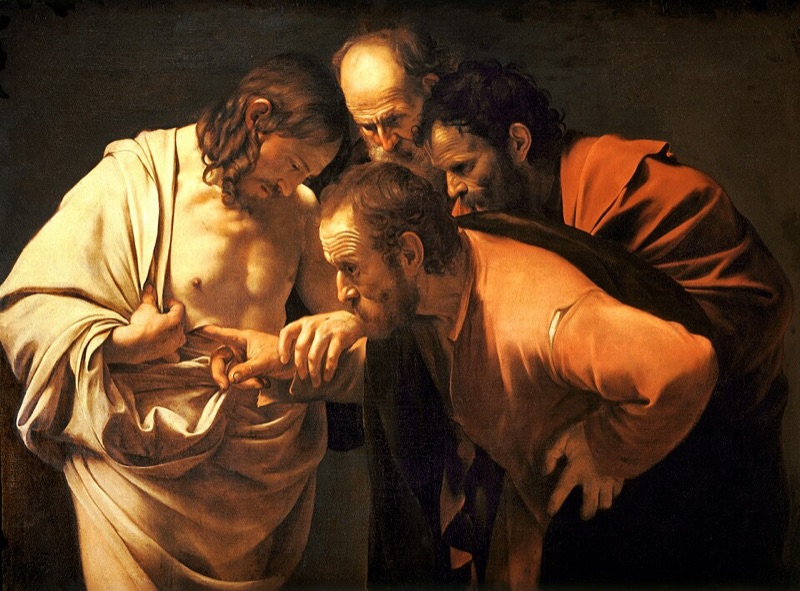
Eight days after Easter, the risen Jesus showed Thomas his wounds. Thomas answered with the clearest confession of faith in the Gospels: “My Lord and my God!” He who had doubted became the one who proclaimed Jesus as God.
According to the ancient and constant tradition of the Church in India, Thomas reached the Malabar coast, traditionally at Kodungallur (Muziris) in AD 52, preached the Gospel and founded Christian communities, remembered as the seven and a half churches. He is said to have been martyred by a spear near Mylapore (Chennai) around AD 72; his tomb is venerated in the San Thome Basilica. Part of his relics are kept at Ortona in Italy. The St Thomas Christians of Kerala, Syro-Malabar and Syro-Malankara, keep his feast, Dukrana, on 3 July.
Lessons
Honest questions can lead to deep faith
Thomas did not pretend to understand. He asked, and Jesus answered him with “I am the way, and the truth, and the life.”
Doubt is not the end
Thomas doubted, but he stayed with the community; on the eighth day he was with the other disciples, and there he met the risen Lord.
Faith is a personal confession
“My Lord and my God” is not a general statement. It is personal: my Lord, my God. Say it at the elevation of the Host.
Faith becomes mission
The apostle who once doubted travelled to the end of the known world. Our faith in Kerala is the fruit of his courage.
Stories
“Let us also go, that we may die with him” (history)
When Lazarus died, Jesus decided to return to Judea, though the leaders there wanted to stone him. The other disciples hesitated; Thomas said to them, “Let us also go, that we may die with him” (John 11:16). The one remembered as the doubter was first a man of courage.
The palace in heaven (legend)
An ancient writing, the Acts of Thomas (3rd century), tells that King Gundaphorus gave Thomas money to build him a palace. Thomas gave it all to the poor, and told the king that his palace was being built in heaven. The book is not part of Scripture and the story is legendary, though a king named Gondophares is known from coins of that period.
Words of the saint
“Let us also go, that we may die with him.”
St Thomas, John 11:16
“Lord, we do not know where you are going. How can we know the way?”
St Thomas, John 14:5
“My Lord and my God!”
St Thomas, John 20:28
“The disbelief of Thomas has done more for our faith than the faith of the other disciples.”
St Gregory the Great, Homily 26 on the Gospels
Homily · The saint's life and message
1. The courageous disciple
Let us also go, that we may die with Him (John 11:16): Thomas was ready to follow Jesus into danger.
2. The honest questioner
Lord, how can we know the way? (John 14:5). Honest questions lead to Jesus, the Way.
3. From doubt to confession
My Lord and my God (John 20:28): the clearest confession of Christ's divinity in the Gospels.
4. Apostle of our land
According to the ancient tradition of the Church in India, Thomas preached here and died a martyr. His faith is our inheritance.
Dear brothers and sisters, we often call him doubting Thomas, but the Gospel of John shows us a much richer man. When Jesus decided to return to Judea, where His enemies wanted to kill Him, it was Thomas who said to the others: let us also go, that we may die with Him (John 11:16). He was brave and loyal.
At the Last Supper, when Jesus spoke of going to prepare a place, Thomas asked honestly: Lord, we do not know where you are going; how can we know the way? And Jesus gave one of His greatest answers: I am the way, and the truth, and the life (John 14:5–6). Honest questions are not the enemy of faith; brought to Jesus, they lead to deeper faith.
After the Resurrection, Thomas was absent, and he refused to believe without seeing. Eight days later Jesus came again and invited him to touch His wounds. Thomas did not need to touch; he fell down and said: my Lord and my God (John 20:28). The one who doubted made the highest confession in the Gospels. Jesus added a blessing for us: blessed are those who have not seen and yet have come to believe (John 20:29).
According to the ancient and constant tradition of the Church in India, Thomas brought this faith to our land, founded communities and gave his life as a martyr. Let us honour him by living his faith: courageous, honest, adoring and missionary. At every Holy Mass / Holy Qurbana, when the Body of Christ is raised, let us say with him: my Lord and my God.
Homily option 2 · In the light of the Word: blessed are those who have not seen
1. Faith without seeing
Jesus blesses all future believers (John 20:29).
2. The wounds that heal
The risen Christ keeps His wounds (John 20:27; Isaiah 53:5).
3. Peace be with you
The risen Lord's first gift is peace and the Spirit (John 20:19–23).
4. Sent as He was sent
As the Father has sent me, so I send you (John 20:21).
Dear friends, when Jesus said to Thomas: blessed are those who have not seen and yet have come to believe (John 20:29), He was thinking of us. We have not touched His wounds or seen Him with our eyes. Yet we believe, because of the witness of Thomas and the apostles. That blessing is for every Christian in every age.
Notice that the risen Jesus still bears His wounds. Isaiah had said: by His bruises we are healed (Isaiah 53:5). Jesus did not hide His wounds; He showed them. They became the proof of His love and the place where Thomas found faith. Our wounds too, when we bring them to Christ, can become places of healing and faith.
The first words of the risen Lord to the disciples were: peace be with you. Then He breathed on them and gave them the Holy Spirit and the power to forgive sins (John 20:19–23). Thomas missed that first evening because he was not with the community. Faith grows in the community of the Church, especially on the Lord's Day.
Finally Jesus said: as the Father has sent me, so I send you (John 20:21). Thomas was sent to the ends of the earth. We are sent to our homes, schools and workplaces. Let us not keep our faith to ourselves. Let us say with our words and lives: my Lord and my God.
Homily option 3 · For young people and families: questions and courage
1. It is fine to ask
God is not afraid of our questions; bring them to Him and to the Church.
2. Stay with the community
Thomas missed Jesus because he was absent; do not skip Sunday.
3. Courage to stand
Let us also go: loyalty to Jesus when it costs something.
4. A faith of your own
My Lord and my God: make the faith of your parents your own.
Dear young people, St Thomas is a saint for you. He was not satisfied with easy answers. He asked questions. Many of you have questions about God, the Church, suffering, science and faith. That is good. God is not afraid of your questions. Bring them to Him in prayer, read the Gospel, ask your parents, your catechist, your priest.
But notice one thing: Thomas missed the first appearance of the risen Jesus because he was not with the others. When we stay away from the community, from Sunday Holy Mass / Holy Qurbana and from the parish, our questions can become bitterness. Stay close. A week later, when Thomas was with the others, Jesus came to him.
Thomas also had courage. When following Jesus was dangerous, he said: let us also go, that we may die with Him. Today following Jesus may cost you popularity, a party, a lie you will not tell, a friend group you leave. Be loyal like Thomas.
Parents, your children will not inherit faith like land or gold. Each one must make the confession of Thomas personally: my Lord and my God. Pray with them, answer their questions patiently, and live the faith joyfully. Then the faith Thomas brought to our land will pass to the next generation.
Prayer
Lord God, you gave St Thomas the grace to confess your Son as Lord and God. Through his prayers keep alive the faith he planted in our land, and make us, like him, witnesses of the risen Christ. Amen.