St Athanasius of Alexandria
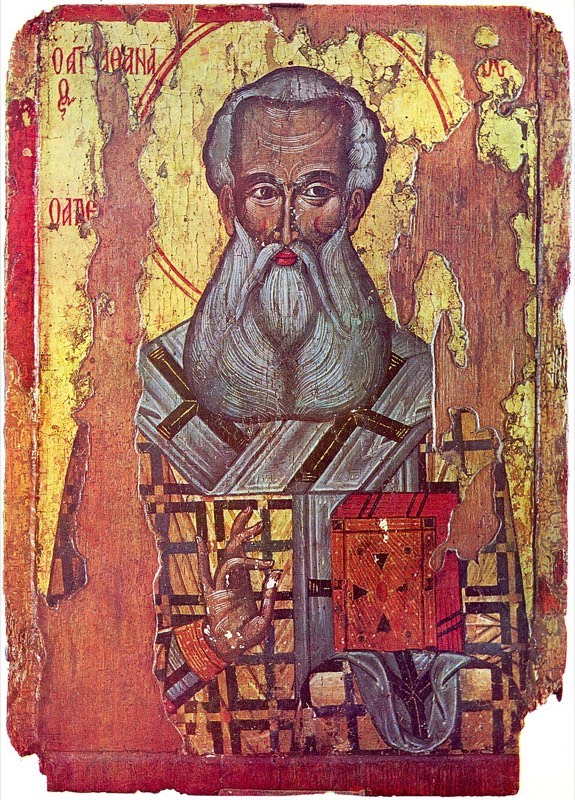
| Time | Born about 296 to 300 (sources differ). Died 2 May 373 |
|---|---|
| Where | Alexandria, Egypt. In exile at Trier (Germany), Rome (Italy), and the deserts of Egypt |
| What he was | Deacon at the Council of Nicaea, then Bishop of Alexandria for 45 years, from 328 to 373. In Coptic tradition, Pope of Alexandria |
| Language | Greek. Some of his works survive only in Coptic or Syriac, and tradition says he knew Coptic too, though scholars differ |
| Known as | "The pillar of the Church" (St Gregory of Nazianzus). Athanasius the Great. Father of orthodoxy |
| Honoured | Saint and Doctor of the Church. One of the four great Doctors of the East, named as such by Pope Pius V in 1568. Latin Church: 2 May. Byzantine Churches: 18 January, with St Cyril. Syro-Malabar calendar: 2 May. Syro-Malankara calendar: 18 January, with St Cyril of Alexandria |
His life
Youth in Alexandria. He was very probably born in Alexandria, the great city of Egypt. Benedict XVI says about 300. The Catholic Encyclopedia argues for 296 to 298. Of his family we know almost nothing. His writings show a good Greek education. The story told by Rufinus, of the boy Athanasius playing at Baptism on the beach, while Bishop Alexander watched, is an old tale that does not quite fit the dates. Alexander took him into his service. He became a deacon and the bishop's secretary. He also came to know the monks of the desert.
Arius. About 318 to 320 a respected priest of Alexandria named Arius began to teach that the Son of God was a creature. He was the highest of creatures, but "the Son was not always", in the words Athanasius reports from him. A synod of about a hundred bishops of Egypt and Libya condemned this. Arius had friends elsewhere, and the quarrel spread.
Nicaea, 325. Emperor Constantine called the first Ecumenical Council at Nicaea, in May 325. Athanasius came as Alexander's deacon. The bishops confessed that the Son is homoousios, "of the same substance" with the Father. This is the faith we say in the Creed, in the form later completed at Constantinople. Athanasius spent the rest of his life defending that word's meaning, though he uses the word itself sparingly in his writings.
Bishop, 328. When Alexander died, Athanasius, still young, succeeded him. His episcopate is dated from 8 June 328. His enemies said he was under the age of thirty. He visited his churches. He kept up ties with the monks of Pachomius. He also consecrated Frumentius as bishop for Ethiopia, and so gave that Church its first shepherd.
Enemies gather. Arius's friends, led by Eusebius of Nicomedia, had the ear of the court. The Melitians, a rigorist group in Egypt, joined them. Charges were brought against him: that he had laid a tax of linen on the province; that his men had broken a chalice belonging to a priest called Ischyras; even that he had murdered a bishop named Arsenius and kept his hand for magic. According to his own account the man was later shown to be alive. A synod at Tyre deposed him in 335.
The five exiles
| When | Under | Where, and what happened | |
|---|---|---|---|
| 1 | 335 or 336 to 23 November 337 | Constantine | After Tyre he went to the emperor, and he was accused of threatening to stop the grain ships from Egypt. He was sent to Trier in Gaul (Germany today), where Bishop Maximinus welcomed him. Arius died in 336, and Constantine in May 337. Then he was allowed home. |
| 2 | 16 April 339 to 21 October 346 | Constantius II | Gregory of Cappadocia was placed in his see by force. He went to Rome. Pope Julius and a Roman synod declared him innocent. The Council of Sardica (Sofia, Bulgaria), in 343, agreed. He stayed in the West for years, and spoke there of the monks of Egypt. Gregory died in 345, and Constantius let him return. The people welcomed him with great joy. |
| 3 | 8 February 356 to 21 February 362 | Constantius II | Soldiers surrounded the church where he was keeping vigil with his people on the night of 8 February. He got away and lived six years among the monks of Upper Egypt. George of Cappadocia was placed in his see. Athanasius wrote some of his greatest works here, and the Life of Anthony. After Constantius's death, George was killed by a pagan mob in December 361, and Julian let the exiled bishops return. |
| 4 | October 362 to February 364 | Julian | The pagan emperor would not have him teach in Alexandria and ordered him out. He went back to the desert. Julian died in June 363. The new emperor, Jovian, received him at Antioch with honour. |
| 5 | 5 October 365 to 1 February 366 | Valens | A new decree expelled bishops whom Constantius had deposed. He left quietly for a country house outside the city. Old writers say he hid four months in his father's tomb. Fearing a riot, Valens let him come back. |
The ancient chronicle adds this up to seventeen years and more, out of forty five. Benedict XVI says "17 years in exile and suffering for the faith". The dates above follow the corrected reckoning of the Historia Acephala and the Festal Index, as set out in the Nicene and Post-Nicene Fathers. Older works, such as the Catholic Encyclopedia, give some years differently, for example 340 for the second and 364 for the fifth.
"Against the world". In the worst years it looked as if the whole Church had given way. Councils at Arles (353) and Milan (355) condemned him under imperial pressure. St Jerome later wrote that the whole world groaned to find itself Arian. Pope Liberius resisted and was exiled. He is reported to have given way for a time and to have dropped communion with Athanasius. The accounts conflict, and historians debate what exactly he signed. A later saying sums up those years as "Athanasius against the world". But he was never truly alone. The monks stood by him, and so did his people, and bishops in many places quietly held the faith.
Peacemaker, 362. When he came home in 362 he held a council at Alexandria. Its letter, the Tome to the People of Antioch, did a surprising thing. Athanasius asked no more of former opponents than to accept the faith of Nicaea and to reject Arius. He saw that some who shrank from the word homoousios meant the same as he did, and he helped people look past words to meaning. This opened the way to the peace that the Council of Constantinople sealed in 381.
Last years. After 366 he stayed in Alexandria, preaching, writing, and strengthening the churches. In 367 his Easter letter gave a list of the books of Scripture. He named his priest Peter to follow him and died in his own city, in peace, on 2 May 373. His feast in the Latin Church is the day of his death.
The world he lived in
He was born near the end of the last great persecution. As a young man he saw Constantine make Christianity lawful. His own life shows the new danger that followed. The persecutor was no longer a pagan outside but often a Christian emperor who wished to keep peace in his empire by choosing the bishops. Benedict XVI says that Constantine "was not so much concerned with theological truth but rather with the unity of the Empire". An emperor could send soldiers into a church to remove its bishop.
Alexandria was a city of learning, of Greek philosophy, of grain ships for the empire, and of crowds quick to riot. It had a famous Christian school. South and west of it lay the desert, where men and women were beginning to live as monks. Anthony and Pachomius were his elders and friends. So Athanasius lived between the city and the desert, and his life tied the two together.
Arius's teaching seemed reasonable to many. God is one, it said, and the Son came after, a kind of link between God and the world. It was easy to grasp. The danger, says Benedict XVI, is that such a Christ leaves God "for ever inaccessible to us".
What he taught
- The Word became man so that we might share God's life. This is the centre of his teaching. "He was made man so that we might be made God" (On the Incarnation 54, 3). The Catechism quotes it at paragraph 460. This does not mean that we stop being creatures. It means that by grace we are made sharers in the divine nature (2 Peter 1:4).
- Why God became man. Humanity had fallen into death and God's image was being ruined. Only the Maker could remake us. So the Word took a body from a spotless Virgin, offered it for all in death, and rose as the first-fruits (On the Incarnation 6 to 9, 20 to 21). With the Resurrection he banished death from us like "straw from the fire" (8, 4).
- The Son is truly God. If the Son were a creature he could not unite us to God, and Christians would be worshipping a creature. He was always the Son, and of one substance with the Father (Orations against the Arians; On the Decrees of Nicaea; On the Councils).
- The Holy Spirit is God as well. When some denied this, he wrote four letters to Bishop Serapion of Thmuis. If the Spirit makes us holy and joins us to God, he cannot be a creature. These letters prepared the way for the Creed's words on the Spirit.
- The whole Scripture speaks of Christ twice over. It says that "he was ever God" and that afterwards for us he took flesh (Orations 3, 29). Read in this way, the texts Arians used about his weakness refer to his manhood.
- The books of Scripture. His Easter letter of 367 (Letter 39) lists the twenty seven books of the New Testament we have today. It is the earliest known list to give just those. "These are fountains of salvation." For the Old Testament he follows a shorter reckoning, and he lists Wisdom, Sirach, Esther, Judith and Tobit as books to be read by those newly joining. The Church's full list was settled in later councils.
- Mary. The same passage of the Orations calls the Virgin Mary "Bearer of God" (Orations 3, 29), and he also calls her "Ever-Virgin" (Orations 2, 70), decades before the Council of Ephesus.
- Creation is good and God is near. The Word who made the world also holds it together. So the body and the world are no enemies. God is not far away (Against the Pagans; On the Incarnation).
- The monastic life. In the Life of Anthony and in his letters to virgins and monks he shows the life of prayer as a witness to Christ's victory over death and evil.
- The Psalms. In substance, from the Letter to Marcellinus: the Psalms are like a mirror where each person sees the movements of his own soul, and so finds words for prayer.
Honest notes
The Church has never said he erred in doctrine. Benedict XVI does call his firmness "tenacious and, if necessary, at times harsh". Much of what we know of those fights comes from his own pen. This touches his methods and does not touch the faith he defended, which the whole Church made its own.
How he taught
From Scripture. His first question is what Scripture says, read as a whole. He argues from texts again and again.
From salvation. His great argument is simple. What would have to be true of Christ for us to be saved? If he is not truly God, he cannot make us sons of God. People who cannot follow philosophy can follow this.
From worship. Christians are baptised in the name of the Father, Son and Spirit, and they worship Christ. The Church's prayer tells us what she believes.
By story. In the Life of Anthony he teaches by showing one man's life. He adds documents to his own defences and letters, so the reader may judge.
Year by year. Each year, even from exile, he wrote a Festal Letter announcing the date of Easter and encouraging the faithful, and so kept his people together. His style is plain, and in debate often sharp. He can be hard on his opponents in ways we would not copy now.
His works
Dates mostly follow the chart at Fourth Century Christianity, based on the Clavis Patrum Graecorum. Many dates are uncertain.
Doctrine
- Against the Pagans and On the Incarnation: one work in two parts. Scholars date it anywhere from about 318 to the 330s.
- Orations against the Arians (about 337 to 345). The fourth, printed with them, has long been recognised as not his.
- On the Decrees of Nicaea (350 to 356).
- On the Opinion of Dionysius.
- On the Councils of Ariminum and Seleucia (359 to 362).
- Letters to Serapion on the Holy Spirit (359 to 360).
- Tome to the People of Antioch (362): from a council, under his name.
- Letter to Jovian (363).
- Letters to Epictetus, Adelphius and Maximus (about 370 to 371): on Christ.
- Letter to the Bishops of Africa (369): some question whether it is his.
- Homilies on Matthew 11:27 and Luke 12:10.
Defence and history
- Circular Letter (339 to 340).
- Defence against the Arians (about 357), with documents from 328 to 347.
- Defence before Constantius (353 to 357).
- Defence of His Flight (357 to 358).
- History of the Arians and letters to the monks (357 to 360).
- Letter to the Bishops of Egypt and Libya (356).
- Letter to Serapion on the Death of Arius.
Pastoral and spiritual
- Life of Anthony (356 to 362). Some earlier scholars challenged its authorship, but Benedict XVI treats it as his.
- Festal Letters (329 to 373): about thirty survive, many in Syriac or Coptic and some in pieces.
- Letter to Marcellinus, on the Psalms.
- Writings on the Psalms. Which of these are his is disputed.
- Letters to Amun, Dracontius, Orsisius, Rufinianus and others.
- Letters to Virgins and writings on virginity, surviving in Coptic, Syriac and Armenian. Their authorship is partly debated.
- Fragments on the moral life, in Coptic.
Not by him
The so-called Athanasian Creed (Quicumque) is a Latin creed long called by his name. It is now generally thought to date from the 5th century in the West. Several other works have been attached to his name, including Against Apollinaris, which many doubt. Many fragments are too short to judge.
A short taste
"[The Word] was made man so that we might be made God." On the Incarnation 54, 3, as translated in Benedict XVI, 20 June 2007.
"These are fountains of salvation." Of the books of Scripture. Festal Letter 39, 6, Nicene and Post-Nicene Fathers, translated by Robertson.
What the Popes and the Church say of him
Benedict XVI gave him a General Audience on 20 June 2007. He calls him "the impassioned theologian of the Incarnation", and "the most important and tenacious adversary of the Arian heresy", and adds that he has "always been considered a model of orthodoxy in both East and West". He says that the fundamental idea of Athanasius's whole struggle was "that God is accessible". He closes by linking his life with Anthony's: "those who draw near to God do not withdraw from men, but rather become truly close to them" (quoting Deus Caritas Est 42).
The Catechism quotes his famous line on the Incarnation at paragraph 460.
St Peter's in Rome. Bernini placed his statue, with those of Ambrose, John Chrysostom and Augustine, around the Chair of St Peter.
Pius V in 1568 recognised the four great Doctors of the East, Athanasius among them, when revising the Roman Breviary.
Paul VI and Shenouda III. In May 1973 the Coptic Pope Shenouda III visited Rome for the sixteenth centenary of his death. They shared a celebration at St Peter's. On 10 May they signed a Common Declaration confessing together the faith in Christ, true God and true man. Paul VI's farewell words recalled the sixteenth centenary. So today this great Father is also a bridge.
Relics. His body is said in tradition to have been taken to Constantinople and then to Venice, and San Zaccaria in Venice has a tomb under his name.
Why he matters today
Who is Christ? Many today admire Jesus as a teacher or a good man. Benedict XVI says that a Jesus "halfway" between God and man is "a recurring tendency in history" which appears now in various forms. Athanasius still asks the question: can a creature save us?
Every Sunday. When we say "consubstantial with the Father" or "of the same substance", we are standing on the ground he held.
Courage when the majority is wrong. He shows that truth is not settled by power or by counting heads. Yet his later years also show the other side of courage: he listens, looks for what people really mean, and makes peace when he can.
Hope in exile. Exile produced his finest work, and made him a friend of monks and a teacher of the West. Time away from what we love can bear fruit that we never planned.
Sit with this
- When I say the Creed on Sunday, do I notice what I am saying of Jesus?
- God became man so that I might share his life. What would change this week if I believed that fully?
- Is there someone I have been opposing, who may in fact mean the same as I do, in other words?
Timeline
| Year | What happened |
|---|---|
| about 296 to 300 | Born, probably at Alexandria |
| about 318 to 320 | Arius condemned at Alexandria |
| 325 | Council of Nicaea. Athanasius attends as a deacon |
| 328 | Bishop of Alexandria (from 8 June) |
| 335 | Synod of Tyre deposes him. First exile, to Trier (335 or 336) |
| 337 | Constantine dies. Athanasius returns in November |
| 339 to 346 | Second exile. Rome, then the West. Council of Sardica in 343 |
| 356 to 362 | Third exile, among the monks. Anthony dies in 356. Life of Anthony, Letters to Serapion |
| 362 | Council of Alexandria, and the Tome to the People of Antioch. Fourth exile from October, under Julian |
| 364 | Return, under Jovian's protection |
| 365 to 366 | Fifth exile, for four months, under Valens |
| 367 | Festal Letter 39, on the books of Scripture |
| 2 May 373 | Dies in Alexandria |
| 381 | The First Council of Constantinople completes the Creed |
| 1568 | Named among the four great Doctors of the East by Pius V |
| 1973 | Sixteenth centenary at Rome, with Paul VI and Shenouda III |
Sources: Benedict XVI, General Audience of 20 June 2007; Catholic Encyclopedia, St Athanasius; Historia Acephala and Festal Index, Nicene and Post-Nicene Fathers, vol. 4; Fourth Century Christianity, chart of works; On the Incarnation and Festal Letter 39; Common Declaration of Paul VI and Shenouda III, 1973; Catechism 460. Other feasts outside the Latin Church were checked only in reference works; Syro-Malabar and Syro-Malankara days are from the official calendars (Syro-Malabar Liturgical Calendar, Second Set; Syro-Malankara Panchangam 2026-27).