Clement of Alexandria
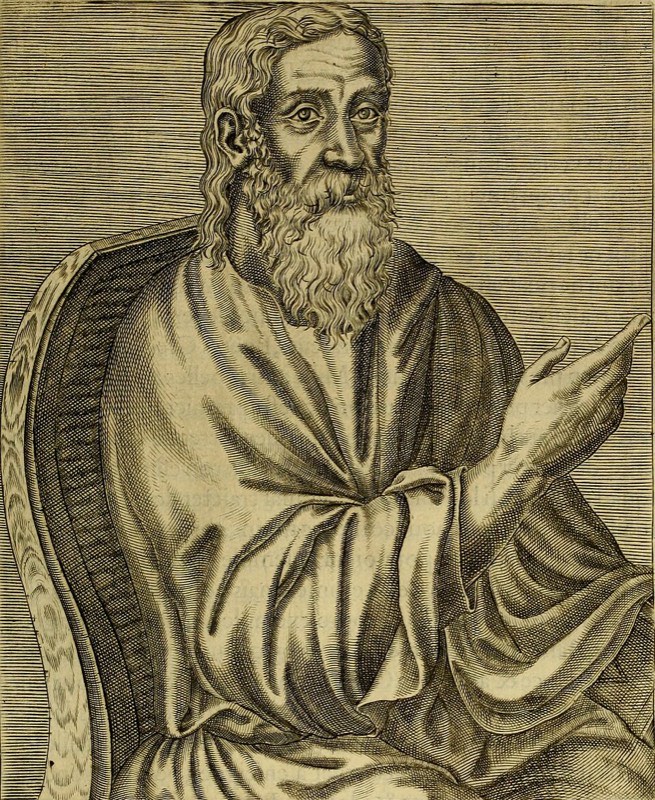
| Time | Born about the middle of the second century; died about 215 |
|---|---|
| Where | Probably Athens (Greece); then Alexandria (Egypt); then Caesarea in Cappadocia (today Kayseri, Turkey) |
| What he was | Convert, priest (according to many early sources), teacher, head of the catechetical school of Alexandria after Pantaenus |
| Language | Greek |
| Known as | A pioneer of the dialogue between faith and reason. His full name, by Eusebius, is Titus Flavius Clemens. |
| Honoured | The answer differs by tradition, and honesty requires the details. See "His title and feast" just below. |
Roman Catholic. No feast today, as far as we could check. His name stood in the old martyrologies, with a feast on 4 December, and he was called a saint until about the seventeenth century. It was then removed from the Roman Martyrology on the advice of Cardinal Baronius. Benedict XIV in the eighteenth century upheld the removal, for three reasons: little is known of his life, he never had a public cult in the Church, and some of his teaching was, if not erroneous, at least suspect. This is the account of the Catholic Encyclopedia, which names the revision under Pope Clement VIII. Other reference works name Pope Sixtus V and the year 1586, and one says that Benedict XIV himself dropped the name in his edition of 1748, so the exact edition is unsettled. His name's removal is not a condemnation of him as a person.
How Catholics write his name now. It varies. Benedict XVI, in his catechesis, calls him simply "Clement of Alexandria" and "a great theologian". St John Paul II does the same in Fides et Ratio. Yet a note in the Catechism (CCC 813, note 262) says "St. Clement of Alexandria", and the Catholic Encyclopedia, whose heading is plain Clement of Alexandria, says in its first lines "St. Clement". He has never been formally canonized; the process did not exist in his time.
Eastern Orthodox. Not commemorated as a saint, according to OrthodoxWiki. Photius of Constantinople, in the ninth century, listed serious errors in his lost Outlines, though he also respected his learning. Some Orthodox writers still call him saint.
His life
Beginnings. We know his birthplace only by inference. Benedict XVI says that he was "probably born in Athens at around the middle of the second century", and that from Athens he inherited his love of philosophy. His parents were very likely pagan, and he came to the faith as an adult after wide reading. Some sources give the year about 150. Others say about 147. None is firm.
The search for a teacher. In the first book of his Stromata he recalls his journeys in search of Christian masters. He names none of them outright: a Greek of Ionia, another from Magna Graecia in southern Italy, a third from Coele-Syria, then an Egyptian, an Assyrian, and a Jewish convert in Palestine. Finally he came to Alexandria, and there he found Pantaenus, and, as he puts it, found rest.
Alexandria, about 180 to 202. Pantaenus was head of the Church's catechetical school, which gave lessons to pagan listeners and deeper teaching to Christians. Clement first helped and then succeeded him, about the year 190 by the Catholic Encyclopedia's reckoning. Many sources, as Benedict XVI notes, say that he was ordained a priest. It was here that he wrote his chief works, and here that the boy Origen was among his pupils, as Eusebius says (Church History 6.6).
Flight in persecution, 202 to 203. The persecution under Septimius Severus fell hard on Egypt and especially on catechists and catechumens. Clement withdrew. Benedict XVI says that he fled "seeking refuge in Caesarea, Cappadocia". He held that Christians should not throw themselves into martyrdom and provoke the persecutor, and he reads Mt 10:23 this way (Stromata 4.10), against the view Tertullian later took. He did not simply save himself, though.
Caesarea and Jerusalem. He stayed with his former pupil Alexander, later bishop of Jerusalem. When Alexander was imprisoned for the faith, Clement took charge of the community, strengthened it and even won new converts. We know this from a letter of Alexander, written about 211 to 212 from prison, and carried by Clement himself to the Church of Antioch. Alexander calls him "the blessed presbyter Clement" in Jerome's Latin rendering, "a man illustrious and approved", who "strengthened and enlarged the church of God" (Jerome, On Illustrious Men 38).
His death. About 215 Alexander wrote to Origen and spoke of "the holy Clement, my master and benefactor" as one who had gone before him (Eusebius, Church History 6.14). That is our last trace of him. The place of his death is uncertain. Benedict XVI gives Cappadocia. One reference gives Jerusalem. He was not, so far as anyone knows, a martyr.
The world he lived in
Alexandria was the second city of the Roman world and the meeting place of its learning. Its great library and schools drew Greek, Egyptian, Roman and Jewish scholars. Benedict XVI calls it a "city-symbol" of the meeting of cultures. Here the Jews of the Dispersion had put their Scriptures into Greek, and the Jewish teacher Philo had read them in the light of Plato, with an allegorical method that Clement later followed.
It was also a home of Gnosticism. Basilides and Valentinus had taught here. They offered a secret knowledge, for a spiritual few, and they looked down on matter and on ordinary believers. A Christian teacher in this city met educated pagans who thought the faith fit for simple people, and Gnostics who thought the same thing. Some ordinary Christians, for their part, feared all philosophy as a road to heresy. Clement stands in the middle of all these three pressures.
What he taught
- Christ is the New Song. The poets told of minstrels who could move wild beasts. Christ is the true singer, who makes music from human hearts by the Holy Spirit (Exhortation 1).
- Christ himself is the teacher at each step. Benedict XVI shows the pattern: Christ the exhorter who calls (Protrepticus), Christ the tutor who trains the baptized (Paedagogus), Christ the master who teaches the depths (Stromata).
- Faith and reason are two wings. So Benedict XVI sums up his teaching: with the two "wings" of faith and reason the Christian rises to know Christ, the Truth (Stromata, throughout).
- True knowledge (gnosis) grows from faith, and it is love. Against the Gnostics, true knowledge is no secret for an elite. It rests on the common faith of the Church, and it becomes, in Benedict XVI's words, "a transforming union of love" (Stromata 6 and 7).
- God gave philosophy to the Greeks. It was "their own Testament" (Stromata 6.8), a preparation for the Gospel somewhat as the Law was for Israel. Benedict XVI quotes the line, and St John Paul II gives the same thought of philosophy as a preparation (Fides et Ratio 38). Clement also insists that revelation stands above philosophy.
- To become like God. Our last end is likeness to God, since we are made in his image (Gn 1:26). This likeness is a journey and needs both grace and practice (Stromata; Paedagogus).
- Life and knowledge go together. Benedict XVI says of him that "it is impossible to know without living and impossible to live without knowing".
- Daily life under Christ. The Paedagogus goes into food, drink, sleep, dress and speech. Nothing is too small for the Tutor's care. The ideal is calm, moderation and simplicity.
- Wealth. Who Is the Rich Man That Is Saved? explains Mk 10:17-31. Money is not evil in itself; what matters is its use and whether the heart is held by it. It ends with the story of the young man who was baptized, fell away and was won back by St John.
- The Church as virgin mother. In substance: there is one virgin mother, and he loves to call her the Church (Paedagogus 1.6; CCC 813 cites this passage).
- The Trinity and Christ. He taught one God, Father, Word and Spirit, before the great controversies, and Christ as one Person who is God and man.
- Baptism as enlightenment. The baptized are at once children of God, enlightened, and made perfect in promise (Paedagogus 1.6), though they still have far to grow.
Where he falls short
The Church's caution about him is real. These are the main points, from the Catholic Encyclopedia.
- Looseness of language. He was a pioneer and not a systematic thinker. On the Trinity some lines come near to blurring the Persons and others near to ranking them. He "needs to be judged", says that encyclopedia, by "the general drift" of his teaching.
- Christ's humanity. He admits a real body in Christ, but he thought it exempt from ordinary needs such as eating, and Christ's soul exempt from joy and sorrow. The Church confesses that Christ was like us in all things but sin (CCC 467).
- The Stoic ideal. His perfect Christian can read more like a Stoic above all feeling than a person whose feelings are rightly ordered.
- Allegory. He finds hidden meanings almost everywhere in the Old Testament, in the manner of Philo, sometimes at the cost of the facts.
- The Outlines. Photius accused this lost work of "impieties and fables", such as the eternity of matter and the passage of souls into other bodies. The Catholic Encyclopedia says that some of the charges rest on mistakes and that his surviving works show him in a better light. Photius himself suspected that the text had been tampered with.
- Two levels of Christians. His language of the ordinary believer and the "true gnostic" could suggest two classes in the Church. Benedict XVI reads him as speaking of two steps on one road, and all Christians begin from the common faith.
How he taught
He taught as one guides a slow and willing pupil, and his teaching is warm. His own account of the Stromata is that the work is a meadow where all sorts of flowers grow at random, or a shady hill planted with every kind of tree. He meant to make his readers search. He was also, it seems, hiding the deepest things from those not ready for them.
His reading was huge. He quotes a great number of Greek poets and philosophers, and in doing so preserves many lines that would otherwise be lost. He is at home in the whole Bible. He loved to find Christ foreshadowed in Greek story as well as in Israel. Benedict XVI compares him to St Paul on the Areopagus, whose dialogue with the Greeks had met little success: Clement "takes up this dialogue and ennobles it".
His books are mostly the fruit of his lessons at the school. The tone is gentle and hopeful, not the tone of a controversialist. Where Tertullian, in the same years, asks what Athens has to do with Jerusalem, Clement answers in effect that Athens was on the way to Jerusalem, without knowing it.
His works
Surviving whole or nearly whole
Protrepticus (Exhortation to the Greeks): a call to pagans to leave the gods and come to the Word · Paedagogus (The Tutor), three books: the formation of the baptized, ending with a prayer to Christ and a hymn · Stromata (Miscellanies, literally "tapestries"), seven books: his fullest work, with the opening pages lost · Who Is the Rich Man That Is Saved?: on Mk 10:17-31
Surviving as notes or extracts
Stromata "Book 8": philosophical notes, not a true book · Excerpts from Theodotus: his notes on a Valentinian teacher, kept with his comments · Extracts from the Prophets (Eclogae Propheticae): short notes on Scripture
Surviving only in fragments
Outlines (Hypotyposes), eight books: a brief commentary on Scripture, with Greek pieces in Eusebius and others, and possibly Adumbrations, Latin notes on the Catholic Letters, in a version made for Cassiodorus and cleansed of objectionable passages. Eusebius preserves from it Clement's account of how the Gospels came to be written (6.14).
Lost, known by title (Eusebius, Jerome)
On the Passover · On Fasting · On Evil Speaking · Exhortation to Patience, or To the Newly Baptized · The Church's Rule, or Against the Judaizers, dedicated to Alexander
Planned or promised
Works he mentions, such as a commentary on Genesis, and possibly a book on prophecy and on marriage. It is not known that they were finished.
Disputed
The hymn at the end of the Paedagogus: "A Hymn of the Saviour Christ" is attributed to him in the manuscripts. Scholars differ. A letter from Mar Saba, reported by Morton Smith, with a "secret" Gospel of Mark: its authenticity is much disputed and scholars remain divided, so it should not be relied on as his.
A short taste
"Sail over the billows of sin without capsizing, be gently wafted by your Holy Spirit." (from his prayer to Christ, Paedagogus 3.12, as quoted by Benedict XVI, General Audience, 18 April 2007)
In substance: the Word of God became human so that you might learn from a human being how a human being may become God. (Exhortation 1, paraphrased; this is the Greek teaching of being made sharers in the divine nature, as in 2 Pt 1:4 and CCC 460)
What the Popes and the Church say of him
Benedict XVI gave him the catechesis of 18 April 2007. He calls Clement "a great theologian" and "one of the pioneers of the dialogue between faith and reason in the Christian tradition". He presents the three chief books as "a true trilogy" for the Christian's growth, though not necessarily meant as such. He concludes that Clement "can serve as an example to Christians, catechists and theologians of our time", and he ends by praying Clement's own prayer to Christ.
St John Paul II, in Fides et Ratio 38, says that Clement called the Gospel "the true philosophy" and saw philosophy as "instruction which prepared for Christian faith".
The Catechism refers to him once by name in the Vatican concordance, in the note to CCC 813 on the unity of the Church.
Ancient voices. St Alexander of Jerusalem calls him "holy". St Jerome admired his learning. The list called the Gelasian Decree, by the Catholic Encyclopedia's report, says that his works are not to be received, and Photius listed errors. Thus, his name has had both honour and caution from very early on, and it still has.
Why he matters today
Clement asks a question that every age must answer: what does a Christian do with the culture around him? He did not simply reject Greek learning, and he did not surrender to it. He took what was true, because whatever is true comes from the Word. People who read Indian philosophy, or modern science, in the light of Christ are walking a road he helped to open, and they need his caution as well as his courage.
He shows catechists a method: first call, then train, then teach. A good parish still follows that order.
And he speaks plainly about money to Christians who have it. He neither tells the rich that they are lost nor tells them that all is well. He asks them whose their hearts are.
Sit with this
- What true and good thing in my own culture could be a road to Christ?
- Is what I know about God changing how I live, or is it only something I know?
- Who first called me to the faith, who trained me, and who taught me? Have I thanked them?
Timeline
| Date | Event |
|---|---|
| About 150 | Born, probably at Athens |
| Before about 180 | Journeys in search of Christian teachers |
| About 180 | Comes to Alexandria and to Pantaenus |
| About 190 | Succeeds Pantaenus at the school |
| 190s to about 202 | Chief works; Origen among his pupils |
| 202 to 203 | Leaves Alexandria under Septimius Severus |
| About 211 to 212 | Bears Alexander's letter to the Church of Antioch |
| About 215 | Spoken of as dead in Alexander's letter to Origen |
| Ninth century | Photius lists errors in the Outlines |
| Until about 1600 | Named in the martyrologies, feast on 4 December |
| Late 16th or early 17th century | Name removed from the Roman Martyrology on Baronius's advice |
| 18th century | Benedict XIV upholds the removal |
| 1998 | Fides et Ratio 38 cites him |
| 18 April 2007 | Benedict XVI's catechesis |
Sources: Benedict XVI, General Audience, 18 April 2007; St John Paul II, Fides et Ratio 38; Catechism concordance; F. Havey, "Clement of Alexandria", Catholic Encyclopedia (1908), for the Martyrology history and the errors; Eusebius, Church History 6.6, 6.13, 6.14; St Jerome, On Illustrious Men 38; OrthodoxWiki; Wikipedia for the 1586 date, marked here as unconfirmed. Wikipedia, Roman Martyrology, for the 1748 report. Dates for early writers are approximate.