St Ephrem the Syrian
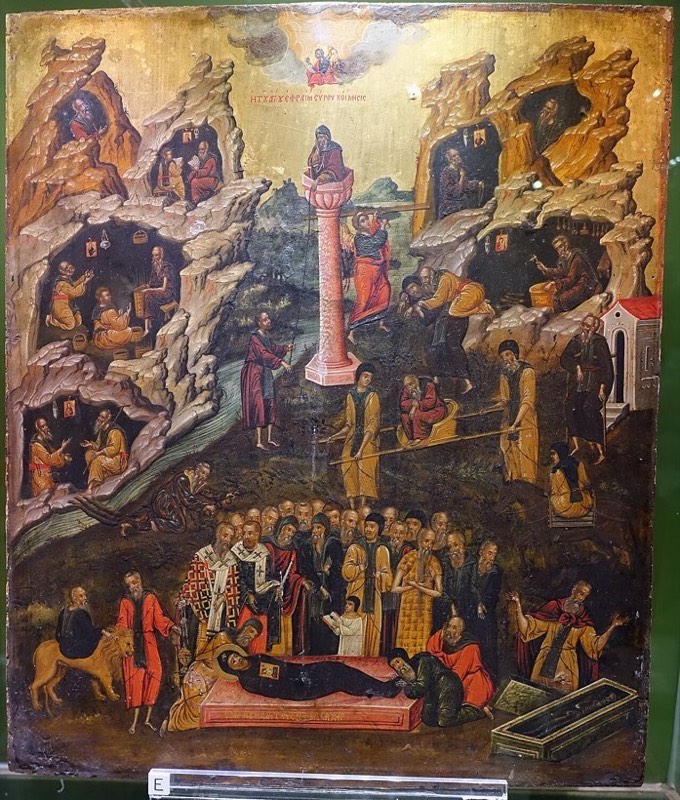
| Time | About 306 to 373 |
|---|---|
| Where | Nisibis (today Nusaybin, Turkey), then Edessa (today Şanlıurfa, Turkey) |
| What he was | Deacon, teacher, poet and hymn writer |
| Language | Syriac |
| Known as | Harp of the Spirit |
| Honoured | Doctor of the Church, named by Pope Benedict XV in 1920 |
His life
Ephrem was born at Nisibis and served there as a deacon and teacher, in the time of Bishop Jacob of Nisibis. In 363 the city passed to Persia, and many Christians left. He settled in Edessa, where he taught for his last ten years.
Tradition says that he died in 373 after caring for the sick during an epidemic in the city.
What he taught
- God is beyond our definitions. We know him through what he has revealed, in Scripture and in creation.
- Christ is truly God and truly man. Ephrem defends the faith of Nicaea against the errors of his day.
- Mary. He sings of her as the Mother of the Lord, with great tenderness.
- The Eucharist and Baptism. His hymns dwell on the holy mysteries as the place where we meet Christ.
How he taught
He taught through song. His teaching hymns (madrashe) and verse homilies (memre) were written for the assembly, and tradition says he trained choirs of women to sing them. He teaches through images and paradox: the Lord who holds all creation becomes small enough to be held by his mother.
His works
Hymns
On the Faith · On the Nativity · On Paradise · On Virginity · On Unleavened Bread · On the Church · Nisibene Hymns · Against Heresies · Against Julian
Scripture commentaries
On Genesis · On Exodus · On the Diatessaron (the Gospels woven into one account)
Prose and homilies
Homily on Our Lord · Prose Refutations
Why he matters today
He shows that theology can be prayed and sung. He is a father of the Syriac tradition shared by the Syro-Malabar and Syro-Malankara Churches, and is honoured in the Latin Church as well.
Sit with this
- Where has a hymn taught me more than a sermon?
- What in my faith still makes me wonder?
More Fathers on this shelf
| Father | Time | Where |
|---|---|---|
| St Ignatius | died about 108 | Antioch |
| St Irenaeus | about 130 to 202 | Smyrna, Lyons |
| Aphrahat, the Persian Sage | about 270 to 345 | Persia |
| St Athanasius | about 296 to 373 | Alexandria |
| St Gregory Nazianzen | about 329 to 390 | Cappadocia, Constantinople |
| St Basil | about 330 to 379 | Caesarea in Cappadocia |
| St Ambrose | about 340 to 397 | Milan |
| St Jerome | about 347 to 420 | Rome, Bethlehem |
| St John Chrysostom | about 349 to 407 | Antioch, Constantinople |
| St Augustine | 354 to 430 | Hippo, North Africa |
| St Cyril | about 376 to 444 | Alexandria |
| St Leo the Great | died 461 | Rome |
| St Gregory the Great | about 540 to 604 | Rome |
| St John of Damascus | about 675 to 749 | Damascus, Mar Saba |
Dates for the early Fathers are approximate.